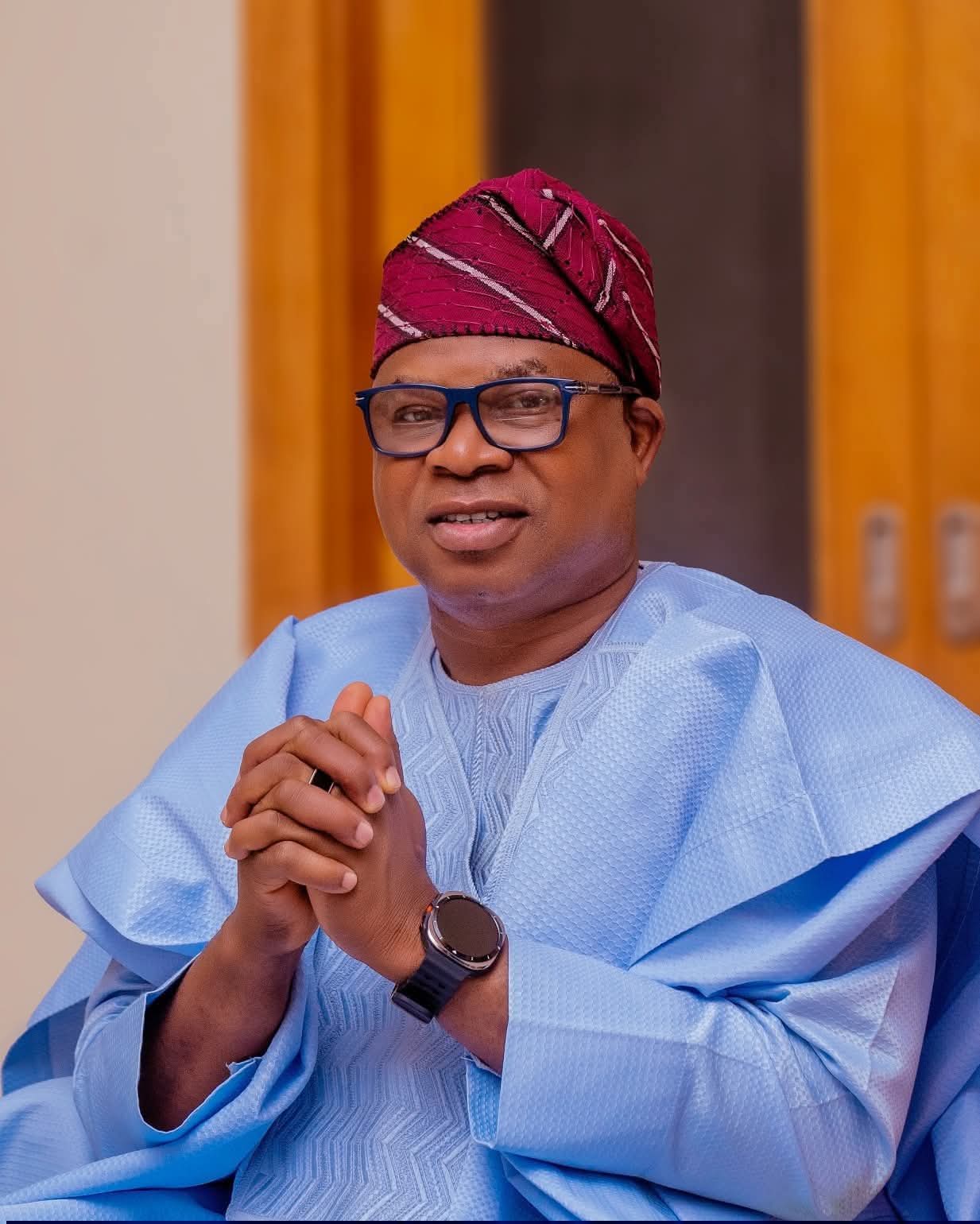
Osun 2026: Asiwaju Oyebamiji Represents Leadership The State Truly Needs
BY ABIOLA YUSUF

There is a popular saying that elections come and go, but leadership decisions shape generations, therefore, as Osun State moves steadily toward the August 8, 2026 governorship election, the stakes are higher.
This is not merely a contest of personalities or party slogans, it is a referendum on the kind of leadership Osun needs at a time of economic uncertainty, rising social expectations and shrinking public resources.
From Osogbo to Ilesa, from Iwo to Ikirun, Ese to Iragbiji, Ikire to Ila-Orangun and across the ancient city of Ile-Ife, the conversations are becoming more serious.
While civil servants worry about job security and pension sustainability, traders and artisans ask for better infrastructure and stable policies.
Also, young graduates search for opportunities that do not require migration out of the State and all these are not problems that can be solved with energy on the dance floor rather, they require a governor with depth, discipline, experience and direction.
This is where Asiwaju Munirudeen Bola Oyebamiji also known as AMBO enters the conversation, not as a crowd entertainer, but as a serious administrator prepared for serious governance.
This is because Osun is not an easy state to govern especially with limited internally generated revenue, heavy dependence on federal allocation, infrastructural gaps and a youthful populati, whichon combine to create complex governance demands.
However, in such an environment, leadership must be guided by numbers as much as by narratives. The next governor must understand how to manage scarce resources, prioritise spending, attract investment and still deliver social services.
These are not theoretical skills; they are acquired through experience. Oyebamiji’s public service journey shows a steady progression through exactly these responsibilities.
For instance, as Commissioner for Finance in Osun State, Oyebamiji occupied arguably the most sensitive position in government. The ministry is the engine room of governance, the place where policies are either funded or abandoned and during his tenure, Osun navigated difficult fiscal periods that tested the resilience of many states across Nigeria.
Federal allocations were inconsistent, obligations were high, and public expectations remained intense. Managing such a situation required discipline, negotiation and strategic planning.
Rather than reckless spending or populist shortcuts, Oyebamiji emphasised fiscal prudence and responsible budgeting, ensuring that salaries, pensions and statutory obligations remained central priorities.
For professionals and civil servants who value stability and predictability, this experience is not abstract, it is directly relevant to daily life.
Oyebamiji’s service as Managing Director of the Osun State Investment Company Limited (OSICOL) expanded his leadership outlook beyond government spending into wealth creation. This role demanded a shift from consumption to productivity, from simply allocating funds to managing assets for returns.
At a time when states must think creatively to survive economically, his approach recognised that Osun’s assets, land, enterprises and strategic investments, must work for the people. This private-sector-influenced mindset is critical for job creation, industrial expansion and sustainable development.
For business owners in Osogbo, entrepreneurs in Ilesa and investors watching Osun from outside, this background signals economic seriousness.
Also, as the Managing Director of the National Inland Waterways Authority (NIWA), Asiwaju Oyebamiji operates at a national level, overseeing a strategic federal institution with complex responsibilities.
NIWA’s mandate spans infrastructure development, regulation, safety and revenue generation across Nigeria’s inland waterways.
Running such an agency requires firmness, accountability and technical competence. It involves coordinating with multiple states, federal ministries and private stakeholders. This exposure has sharpened Oyebamiji’s administrative skills and broadened his strategic vision, qualities directly transferable to governing Osun State.
It also positions him to better engage Abuja, development partners and investors on behalf of Osun.
When Oyebamiji declares, “I am ready for the job,” it is not a campaign slogan built on excitement. It is the confidence of someone who has spent decades working inside the machinery of government.
His assertion that “I am the candidate to beat” reflects a belief anchored in record, not rhetoric. This confidence resonates with voters who value preparation over improvisation and competence over charisma.
Governance is not entertainment though political excitement has its place during campaigns, it does not repair roads in Oke-Baale, improve healthcare facilities in Ila-Orangun, or expand economic opportunities in Ejigbo. Leadership requires patience, planning and often the courage to make difficult decisions.
Oyebamiji’s background as a disciplined financial administrator suggests a governor who will prioritise results over applause. It signals a leadership style focused on long-term outcomes rather than short-term popularity.
Voters, particularly professionals, civil servants and business-minded citizens, the 2026 election presents a clear question: should Osun choose style or substance?
Bola Oyebamiji offers experience without noise, vision without theatrics and confidence rooted in competence. His career reflects consistency, discipline and an understanding that governance is about building institutions that outlive personalities.
Lastly, as Osun looks toward the future, the choice before voters is not just about voting on election day, but who can govern effectively after the votes are counted.
In an era of limited resources and rising expectations, the state needs a leader who understands systems, respects institutions and plans beyond the next rally.
Bola Oyebamiji represents that leadership. Prepared, tested and focused, he stands as a candidate equipped not only to lead Osun, but to move it forward with purpose and stability.
ABIOLA YUSUF writes from Lagos.












Post Comment