Uganda Election: Opposition Accuses Govt Of Militarising Politics
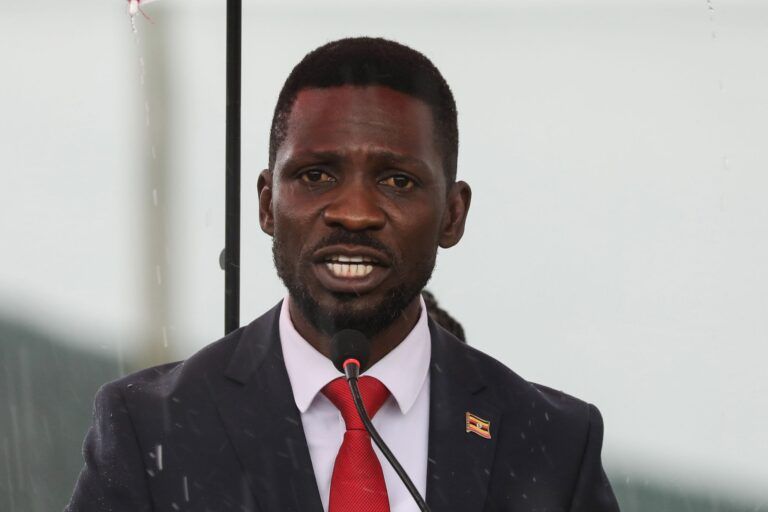
Ahead of the Uganda general election slated for this week, an opposition figure, Erias Lukwago, the mayor of Kampala, has accused the government of entrenching military rule, as security forces intensify their presence around opposition activities.
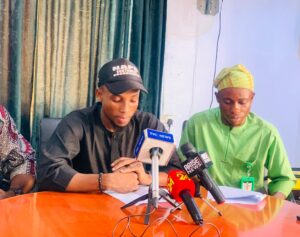
Speaking at a gathering of supporters at the home of a detained opposition figure for a prayer meeting, Lukwago described the election as a direct contest between citizens and President Yoweri Museveni, warning that involvement in opposition politics now carries a high risk of arrest.
Museveni is widely expected to secure another term in Thursday’s vote, extending his nearly four-decade rule.
Join New Telegraph WhatsApp Channel
Discover more
Cultural experience tours
Education news updates
African art pieces
Law news insights
Politics news updates
Digital news access
Opinion column articles
Tech gadgets and electronics
Financial Planning Services
Gospel music
Analysts attribute his continued dominance to firm control over state institutions and the security apparatus.
Now the 81-year-old Museveni came to power as a guerrilla leader in the 1980s and has maintained authority through a heavily militarised system, repeatedly clamping down on political rivals.
The current campaign has been marked by the arrest of hundreds of opposition supporters and at least one reported death.
According to the police, their actions are aimed at preventing disorder, rejecting accusations of political targeting. Opposition figures, however, say detentions and abuse in military custody have become routine.
READ ALSO:
Jonathan Heads Joint AU, COMESA, IGAD Election Observation Mission To Uganda
Polls: Uganda Imposes Ban On Live Broadcast Of Riots, Illegal Processions
Africa Travel Content Creators Head to Uganda for 3rd Edition
Another prominent opposition leader, Kizza Besigye, was abducted in Kenya in 2024 and secretly transferred to a Ugandan military detention facility, where he is facing treason charges. The case has remained unresolved for months.
The prayer meeting was hosted by Besigye’s wife, Winnie Byanyima, who said democratic institutions in Uganda exist largely in name, arguing that real power is concentrated within the presidency and the military.
Analysts say the police force plays a key role in maintaining the status quo. Jude Kagoro, a researcher at the University of Bremen, said officers often view their role as protecting the incumbent leadership rather than acting as neutral enforcers of the law.
The leading opposition candidate, Bobi Wine, whose real name is Robert Kyagulanyi, has described the campaign environment as highly hostile and is frequently seen wearing protective gear.
Observers say the government has also worked to weaken opposition groups through infiltration, internal divisions and targeted inducements.
Under a system informally known as “ghetto structures”, security officials recruit young people in opposition areas who “work for the police to disorganise opposition activities, and also to spy,” said Kagoro.
The government was taken by surprise when Wine burst onto the political scene ahead of the 2021 election, becoming the voice of the urban youth, and responded with extreme violence.
Similarly, Tanzania’s authoritarian government was caught unawares when protests broke out over rigging in last October’s election, and security forces responded by killing hundreds.
The Ugandan government is better prepared now.
“For the last four-plus years, they have been building an infrastructure that can withstand any sort of pressure from the opposition,” said Kagoro.
“We are used to the military and the police on the streets during elections.”
Still, the authorities are not taking any chances. Citizens are being told to vote and return home immediately.
“The regime wants to make people very scared, so they don’t come out to vote,” said David Lewis Rubongoya, secretary-general of Wine’s National Unity Platform.
There has been a spate of arrests and abductions targeting the opposition — a tactic also increasingly used in neighbouring Kenya and Tanzania — with rights groups accusing the East African governments of coordinating their repression.
The violence makes it hard for opposition groups to organise.
“The price people have to pay for engaging in political opposition has become very high,” said Kristof Titeca, a Uganda expert based at Antwerp University.
“What’s left is a group of core supporters. Is there a grassroots opposition? No, there isn’t. It’s way too dangerous.”

![Earthset captured through the Orion spacecraft window on April 6, 2026, during the Artemis II crew's flyby of the Moon. [Handout/NASA/Getty Images via AFP]](https://thesource.com.ng/wp-content/uploads/2026/04/FB_IMG_1775918697229-300x200.jpg)






Post Comment