Oil Prices Surge Above $115 Amid Middle East Tensions
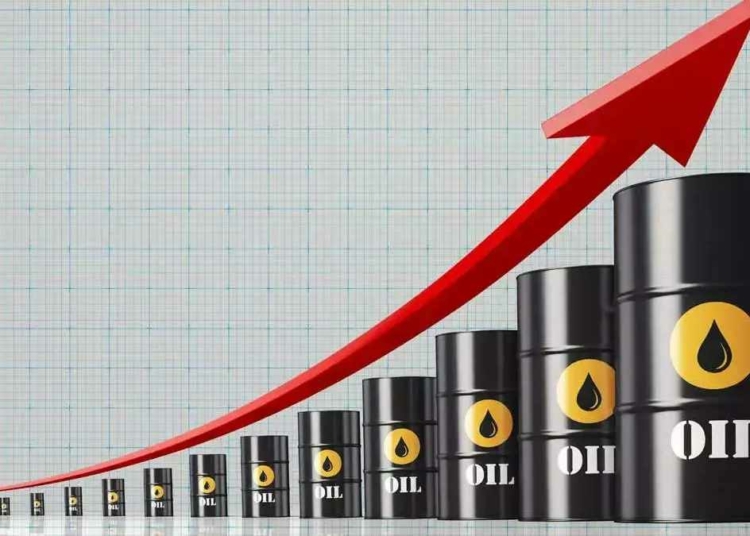
Global oil prices jumped to multi-year highs on Monday as escalating tensions in the Middle East triggered fears of major disruptions to global crude supply.

Brent crude futures surged by $24.96, or 27 percent, to $117.65 per barrel as of 04:51 GMT, marking the largest single-day increase on record for the benchmark, according to Reuters.
US West Texas Intermediate (WTI) crude also climbed sharply, rising $25.72, or 28.3 percent, to $116.62 per barrel. Earlier in the session, WTI touched a high of $119.48, while Brent peaked at $119.50.
The surge follows last week’s strong rally, during which Brent gained 27 percent and WTI rose 35.6 percent, driven by the escalating conflict involving the United States, Israel and Iran.
Energy markets remain particularly concerned about disruptions around the Strait of Hormuz, a critical maritime route through which nearly one-fifth of the world’s oil supply passes.
Shipping activities in the region have slowed due to rising security threats and tanker disruptions, raising fears of tighter global oil supply.
For Nigeria, the surge in global crude prices could translate into higher fuel prices at filling stations.
Despite being one of Africa’s largest crude producers, the country still relies heavily on imported refined petroleum products, making it vulnerable to global price shocks.
Analysts warn that Asian economies dependent on Middle Eastern crude could face the most immediate impact, but countries like Nigeria may also experience fuel supply challenges if the crisis continues.
Meanwhile, major oil producers have begun adjusting output. Iraq and Kuwait have reportedly reduced production, while Qatar has cut liquefied natural gas (LNG) supplies due to disruptions in the region.
Market analysts say Saudi Arabia and the United Arab Emirates could also take similar steps as storage levels tighten and shipping routes remain uncertain.
Investment strategist Vasu Menon of OCBC in Singapore warned that oil prices could continue climbing if tensions persist.
“Unless oil flows through the Strait of Hormuz resume soon and regional tensions ease, upward pressure on prices is likely to persist,” he said.
Commodity analyst Satoru Yoshida of Rakuten Securities also cautioned that the situation could worsen.
“With the late leader’s son now in charge, US President Donald Trump’s regime-change objective in Iran may become more difficult. This could prolong tensions and potentially push WTI prices to $120 or even $130 per barrel,” Yoshida said.
Global markets are now closely watching developments in the Middle East, as any prolonged disruption could significantly reshape the global energy supply chain and fuel prices worldwide.












Post Comment