Adeleke, Ede and the limits of Edenisation By abiodun KOMOLAFE
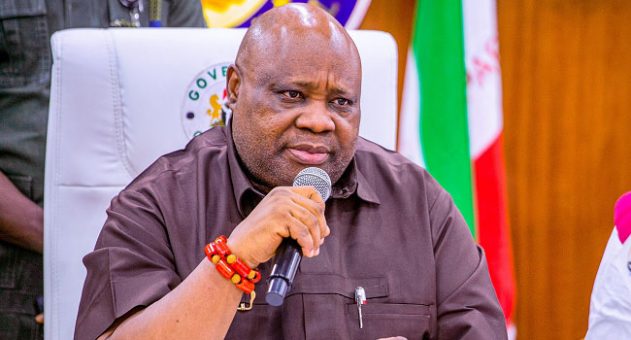
The Federal Government’s veto of the proposal to relocate the Osun State Cargo Airport from Ido-Osun to Ede marks a defining moment in our history. Beyond its strategic necessity as an economic cornerstone, Ido-Osun is a storied landmark. It serves as Nigeria’s first airstrip and warrants consideration for UNESCO recognition. To relocate it would, therefore, be a self-inflicted wound to our national heritage.

While a cargo airport and eventual passenger hub remain non-negotiable for Osun’s industrial evolution, the current push speaks to a singular obsession with Governor Ademola Adeleke’s hometown. Bringing the ‘fruits of power’ home is one thing; doing so in defiance of logic and the state’s collective interest is quite another. History offers a stern rebuke to such blatant parochialism.
In the 1950s, Chief Obafemi Awolowo possessed the clout and political sagacity to site the Western Region’s university in his native Ikenne. Yet, he chose Ife – over a hundred kilometers away – based on objective factors. Similarly, the Region’s Minister of Agriculture, Gabriel Akin Deko, never sought to cluster projects in his native Idanre, in present-day Ondo State.
Under the old parliamentary system, these leaders represented single constituencies, yet they served the entire region. Today, under a presidential system where the governor is elected by a statewide vote, the entire state is the constituency. By prioritizing his hometown for economic largesse, Adeleke has repudiated this constitutional mandate. The legacies of Awolowo and Ladoke Akintola were ennobled by their ability to rise above primary ties. It is a standard that must be upheld today.
Ede, the governor’s hometown, accounts for only two of Osun State’s 30 local government areas and one area office.
Beyond the lopsided projects monstrously favouring Ede, Adeleke has reportedly flooded the government with over 3,000 aides from his hometown. This “Edenisation” began with the removal of Niyi Oginni at OHIS and the head of O’Ambulance, both replaced by kinsmen. Currently, the governor sits as the Commissioner for Works, while B.I. Bello, an Ede native, serves as both Permanent Secretary and Special Adviser.
Using state funds, the governor has already dualized almost all the entrances to his hometown – five at the last count – while surreptitiously funding a backyard airport in defiance of federal orders. In what looks like a family enterprise, his nephew, Tunji Adeleke Jnr, chairs the Local Government Service Commission – a seat usually reserved for the state’s most experienced hands. Adenike Adeleke, the governor’s sister-in-law, is the Commissioner for Federal Affairs, while Morufu Adeleke, Lanre Laoye, and Kolade Adeleke head Budget and Economic Planning, the state’s broadcasting corporation, and the Tourism Board, respectively.
Kazeem Akinleye (Chief of Staff), Adekilekun Fatai Tijani (Permanent Secretary, Local Government Loans Board), and Akibu Ibrahim (Permanent Secretary, Pension Board) are also from Ede.
In the academic sector, the humiliating removal of the Rector of Osun State Polytechnic to make room for an Ede indigene still resonates. Furthermore, the relocation of the Osogbo Industrial Park to Ede and the governor’s attempt to map the Ogo Oluwa and Halleluyah communities as “Ede land” constitute a direct attack on our collective heritage.
The core problem is that Governor Adeleke, rife with nepotism, is clearly not seeking the best and brightest. Any state that truly wishes to move forward must field its ‘first eleven.’ The talent pool in Osun – both at home and in the diaspora – is vast and world-class, yet the ‘Dancing Governor’ does the state a grave injustice by failing to tap into it. This deliberate neglect is self-destructive; it paints a picture of a state content with mediocrity, and it must not be allowed to continue. The opportunity cost is simply too high for us to keep playing games.
Again, this is a cautionary tale for those seeking power. History judges a leader on broad transformation, not hometown favours. Awolowo is not immortalized for what he did for Ikenne, but for his regional strides. Similarly, Kwame Nkrumah is not remembered for his native Nkroful, but for the Volta Dam – a vital fulcrum of Ghana’s power supply he secured despite Cold War tensions. Like Awolowo’s Free Education, these programmes were never limited to a homestead; they sparked an irreversible national social transformation.
Development must prioritize shared prosperity over the aggrandizement of a chosen few. It is doubtful whether “Edenisation” has helped the average Ede family. Rather, the gains seem restricted to an already-pampered elite. This defies equity and explains the misplaced priorities and uneven development now plaguing Osun. Governor Adeleke must not deny other regions the dividends of democracy simply because they are not his birthplace.
May the Lamb of God, who takes away the sin of the world, grant us peace in Nigeria!
Email: [email protected].
Mobile: 08033614419 SMS only.











Post Comment