Journalism Must Redirect Attention to Neglected Issues, Says Media Expert
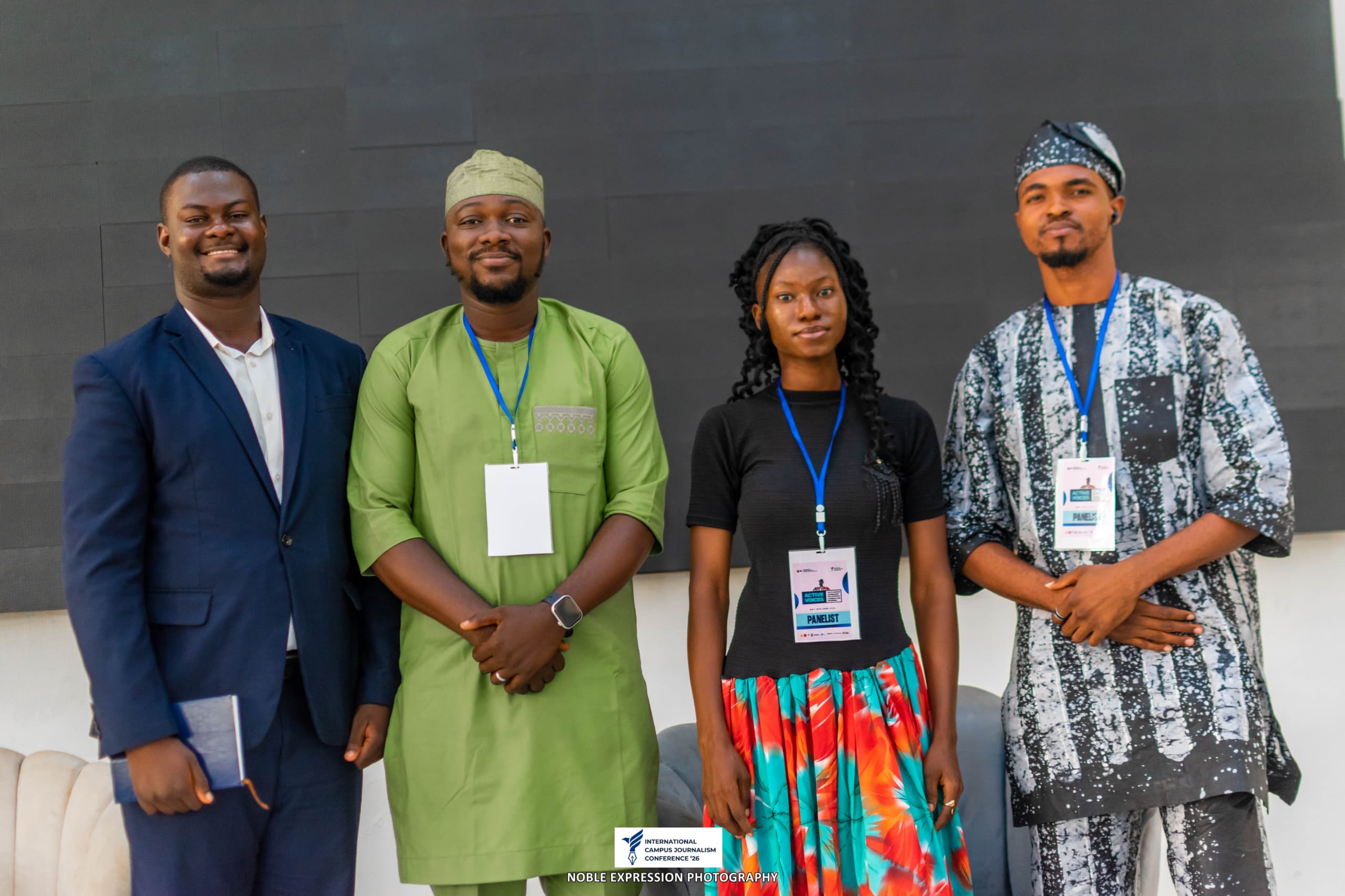
The Founder of Harbinger, a grassroots and accountability reporting platform, Boluwatife Adedokun, has urged young journalists to remain committed to impactful and ethical journalism, stressing that accountability reporting remains essential to democracy despite its financial, emotional and professional challenges.

Adedokun made this known while speaking as a panellist at the 2026 International Campus Journalism Conference held at Obafemi Awolowo University (OAU), Ile-Ife, themed “Active Voices: Youth Driven Journalism for National Cohesion.”
She spoke during a session titled “Vibrant and Impactful Journalism as a Tool for Accountability, Civic Engagement, and National Development,” where she reflected on the realities facing journalists who focus on underreported and community-driven stories.
According to her, accountability journalism often requires significant personal sacrifice, including self-funded reporting, long-distance fieldwork, delayed responses from public officials, and resistance from stakeholders who may avoid engagement or attempt to discredit journalists.
“Sometimes you travel long distances and spend your personal resources just to report a story. In some communities, residents may expect financial support before granting interviews. Stakeholders may refuse to respond or delay feedback for days,” she said.
She also noted that journalists are sometimes accused of political bias or external sponsorship simply for publishing uncomfortable truths about governance and public accountability.
Despite these challenges, Adedokun maintained that journalism must remain focused on public interest rather than popularity metrics.
“People deserve to know what their government promised, what public funds were allocated for, and what has not been done. Journalism should not only follow attention; it should also redirect attention to neglected realities and unheard voices,” she said.
She further warned against emotionally driven misinformation, describing it as one of the most dangerous patterns affecting civic engagement in Nigeria today.
According to her, many individuals now share content online not based on verification, but because it aligns with their emotions, fears, or personal beliefs.
Adedokun urged young journalists to prioritise fact-checking and media literacy, noting that misinformation weakens trust in institutions and undermines civic participation.
She also encouraged students to build journalism careers on passion, ethics, and consistency rather than immediate financial rewards or recognition.
Referencing the principle, “Seek ye first the kingdom of God and every other thing shall be added unto you,” she advised young journalists to focus on credibility and impact, stating that opportunities often follow quality work over time.
She further cautioned journalists against making promises to communities about immediate government action following publication, stressing that journalism is about documentation and accountability, not guaranteed outcomes.
“Impact sometimes takes time, but responsible journalism remains necessary,” she added.
Other panellists at the conference also reflected on misinformation, career development, and the transition from campus journalism into mainstream media practice.
RoundCheck Executive Director, Caleb Ijeoma, emphasised the importance of fact-checking and noted that young journalists can begin creating impact from wherever they are, without waiting for large platforms.
Punch journalist, Segun Odunayo, said journalism remains a tool for accountability and public voice, stressing that impact should be prioritised over financial reward.
Multimedia storyteller, Faith Alofe, shared her journey from campus journalism at OAU through ICONS Organisation and participation in CJID’s UDEME project, highlighting the importance of persistence and portfolio building in journalism growth.
Representing award-winning sports journalist Hassan Abdulsalam, Editor-in-Chief of The Lagos Voice, David Olatunji, advised young journalists to avoid “brown envelope journalism” and invest in continuous learning, even through unpaid opportunities where necessary.
In her opening address, the 53rd President of the Association of Campus Journalists, OAU (ACJOAU), Esther Olatimehin, said journalism plays a central role in shaping national cohesion through ethical storytelling and accurate reporting.
“Narratives are shaped not only by what is reported, but also by what is left untold,” she said, urging young journalists to commit to responsible storytelling that strengthens unity across society.













Post Comment