EAPEAN, GIZ, FMLE Convene Regional Workshop to Strengthen Labour Mobility Systems in West Africa
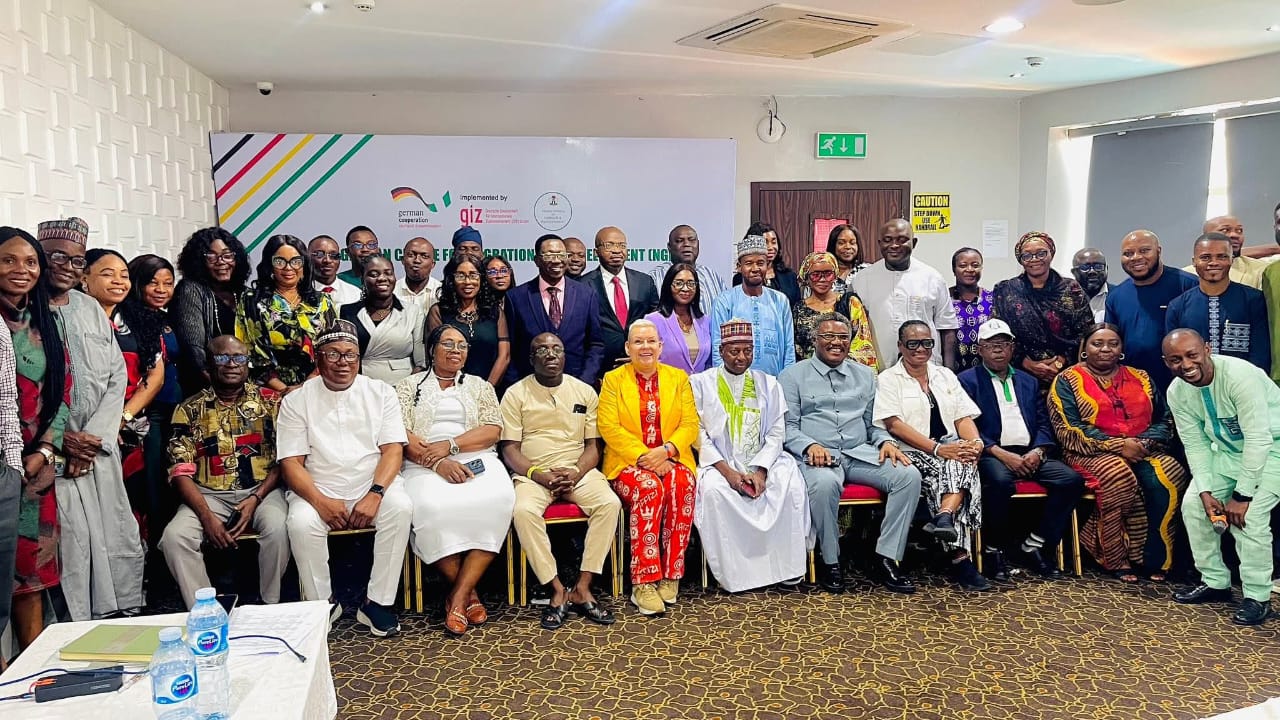
Stakeholders across West Africa and beyond gathered in Lagos for a high-level workshop aimed at strengthening the role of Private Employment Agencies (PEAs) in promoting structured, safe, and demand-driven labour mobility systems across the region.
The workshop, organized by the Centres for Migration and Development (ZME) under the Deutsche Gesellschaft für Internationale Zusammenarbeit (GIZ) GmbH in collaboration with the Federal Ministry of Labour and Employment and the Employers Association for Private Employment Agencies of Nigeria (EAPEAN), brought together PEAs, labour officials, and development partners for experience sharing and practical dialogue.
The workshop aimed at strengthening the contribution of PEAs to safe, orderly, and rights-based labour migration across ECOWAS and Africa, while promoting cooperation between private sector actors, governments, and development partners. The first two days of the workshop focused on understanding the changing context of labour mobility and transitioning from challenges to actionable solutions.
Welcoming participants to the workshop, the President of EAPEAN, Amb. Chief Nzeribe Okegbue PhD, expressed appreciation to GIZ-ZME for supporting the initiative and noted that the workshop was timely, considering the significant transformation currently shaping labour mobility within the ECOWAS region and Africa.
He stated that the operating environment for Private Employment Agencies is increasingly influenced by evolving regional dynamics, changing policy environments, and growing complexity in labour migration systems. According to him, while regional free movement frameworks and continental integration initiatives continue to provide important foundations, the realities on the ground are becoming more fragmented and, in some cases, increasingly informal.
The EAPEAN President emphasized that these developments further reinforce the growing importance of PEAs as critical intermediaries in ensuring that labour mobility remains efficient, structured, transparent, and aligned with decent work principles. He stressed that the Association remains committed to working with governments, development partners, training institutions, and fellow PEAs across the region to promote safe, orderly, and rights-based labour migration systems.
He further highlighted ongoing reform and rebranding initiatives being implemented by EAPEAN, including nationwide radio jingles and sensitization programmes across the six geopolitical zones to raise awareness on the dangers of patronizing unlicensed recruiters and to promote fair and ethical recruitment practices. The Association, he noted, has also intensified advocacy and strategic engagements with government institutions, private sector stakeholders, and international partners while upgrading the Secretariat’s infrastructure and operational capacity in line with global standards for Business Membership Organisations (BMOs).
In his opening address, the Permanent Secretary of the Federal Ministry of Labour and Employment represented by the Zonal Director, North West, Mr. Abdullahi Aliyu emphasized the urgency of strengthening labour migration systems in light of evolving regional dynamics.
The representative noted that while frameworks such as the ECOWAS Free Movement Protocol have historically facilitated mobility, recent geopolitical and economic developments have made labour mobility more fragmented, less predictable, and increasingly informal.
He stressed that: “There is a growing need to move from unstructured migration patterns to more coordinated, transparent, and regulated systems that protect workers while supporting economic development.”
The Ministry reaffirmed its commitment to working with PEAs, development partners, and regional stakeholders to improve governance, strengthen regulatory frameworks, and promote safe and orderly migration pathways.
Speaking on behalf of GIZ-ZME, Ms. Sandra Vermuijten underscored the strategic importance of the workshop in aligning labour migration with development outcomes.
She highlighted that the ZME programme, commissioned by the German Government, focuses on supporting safe and regular migration; linking skills development to employment opportunities; strengthening migration governance systems; and promoting sustainable reintegration.
Ms. Sandra emphasized that: “Private Employment Agencies are critical actors in shaping how labour mobility works in practice. Their role goes beyond recruitment; they are key partners in building structured, transparent, and rights-based migration systems.”
She further noted that the workshop provides an opportunity to translate policy frameworks into practical mechanisms, particularly in linking skills development, certification, and employment.
Discussions on the first day focused on the evolving labour mobility landscape and the expanding role of PEAs. Participants identified five priority challenges affecting the sector: weak and fragmented regulatory frameworks; proliferation of informal recruitment actors; cross-border mobility barriers; limited policy recognition of PEAs; and capacity gaps within the sector.
The second day shifted focus to solutions, with participants designing structured labour mobility pathways linking skills → Certification → Jobs → Migration. These models aim to ensure that migration is demand-driven, skills-based, and properly managed, reducing risks associated with irregular migration.
These models aim to ensure that migration is demand-driven, skills-based, and properly managed, thereby reducing risks associated with irregular migration.
Key outcomes of the workshop included draft pathway models for managed labour mobility; initial cooperation ideas on joint recruitment, data sharing, and cross-border placement; improved understanding of labour demand across priority sectors; and a proposed 6–12 month action plan to guide implementation.
Part of the resolutions reached at the workshop included establishing a regional PEA cooperation platform; piloting structured labour mobility pathways; strengthening engagement with government institutions; improving labour market demand analysis; and developing follow-up coordination mechanisms. Participants emphasized the importance of moving from dialogue to implementation.
The workshop reinforced the growing importance of PEAs as key actors in shaping the future of labour migration in Africa, while highlighting the need for stronger partnerships, improved governance, and actionable frameworks.
As discussions continue into subsequent days, stakeholders remain focused on translating these insights into practical initiatives that will strengthen labour mobility systems across the region.










Post Comment